Here is a link to the full 2 hour video of the first Four Great Vows class: If you have any feedback or want to ask a question please leave a comment to this post.
Author: daosheng
Zhiyi, the Lotus Sutra, and the Four Great Vows
Here are links to three relevant relevant articles, with excerpts. Outline of the Tiantai Fourfold Teachings 天台四教儀 Compiled by the Goryeo Śramaṇa Chegwan 高麗沙門諦觀, Translated by A. Charles Muller 一未度者令度。卽衆生無邊誓願度。此緣苦諦境。 All those who have not yet been saved will be saved, which is expressed as “I vow to save all living beings without limit.” This […]
Confucius says: “No pain, no gain” (Analects 7:8)
[7-8] 子曰。不憤不啓、不悱不發。擧一隅不以三隅反、則不復也。
[7:8] The Master said: “If a student is not eager, I won’t teach him; if he is not struggling with the truth, I won’t reveal it to him. If I lift up one corner and he can’t come back with the other three, I won’t do it again.”
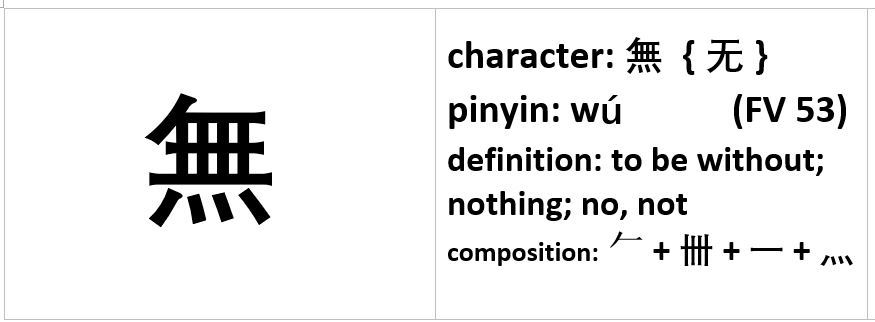
Four Great Vows: Lesson Two
Lesson Two
四 弘 誓 願
眾 生 無 邊 誓 願 度
煩 惱 無 盡 誓 願 斷
法 門 無 量 誓 願 學
佛 道 無 上 誓 願 成
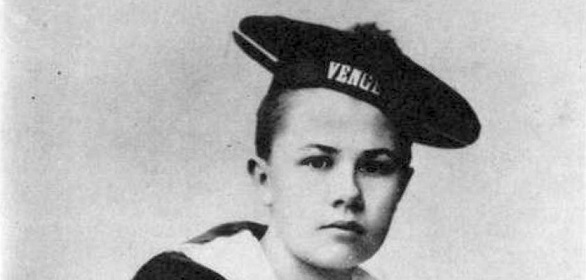
“I am bothered when I do not know others.” (Analects 1:16)
子曰。不患人之不己知、患不知人也。
Charles Muller’s translation:
[1:16] The Master said: “I am not bothered by the fact that I am unknown. I am bothered when I do not know others.”

Confucius asks about everything. (Analects 3:15)
子入大廟、每事問。或曰。孰謂鄒人之子知禮乎。入大廟、每事問。子聞之、曰。是禮也。
When Confucius entered the Grand Temple, he asked about everything.
Someone said, “Who said Confucius is a master of ritual?
He enters the Grand Temple and asks about everything!”
Confucius, hearing this, said, “This is the ritual.”
[Analects, 3:15]
The Four Great Vows, Lesson One
Lesson One:
四 弘 誓 願
眾 生 無 邊 誓 願 度
煩 惱 無 盡 誓 願 斷
法 門 無 量 誓 願 學
佛 道 無 上 誓 願 成
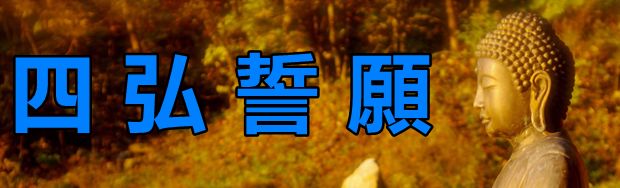
Four Great Vows online class series (starting Saturday, November 5)
The Four Great Vows in Chinese Characters (四 弘 誓 願)
The Four Great Vows describe the Way of the Bodhisattva, which is the Path to Buddhahood. In this series of classes you will learn how to write the original version of these vows in traditional Chinese characters. Many of the characters in the Four Vows are rather complicated, but in these classes you will learn how to decompose complex characters into simpler components. Many of these simpler components have only one or two strokes.
Exemplary Women: Four primary sources on Chinese Buddhist laywomen and nuns
Xing Wang contrasts Peng Shaosheng’s collection, which is exclusively dedicated to Buddhist laywomen, where “Peng depicts women as submissive and inferior to males”, with another collection by Yunqi Zhuhong (雲棲袾宏, 1535–1615) containing stories about both men and women which “celebrated lay female practitioners’ religious achievement as comparable to men.” Furthermore, Xing Wang asserts that Yunqi Zhuhong’s approach was consistent with “a long-lasting and persistent non-binary narrative of lay women in Chinese Pure Land biographies admiring female agency, in which female Pure Land practitioners are depicted as equally accomplished to male ones,” whereas Peng Shousheng’s depiction of women practitioners as “submissive and inferior to males” was his “own invention, rather than a transmission of the inherited formulaic narration of lay female believers, as he claimed.”