衆 生 無 邊 誓 願 度
중 생 무 변 서 원 도
jung saeng mu byeon seo weon do
everything born without limit vow to liberate
Category: zen
Traditional Buddhist Chanting
Over a twelve month period, starting in March 2023, this course will cover the following six chants (we will spend two months on each chant):
Yebul / Homage to the Three Jewels
Kanzeon
Heart Sutra
Great Dharani
Kwan Seum Bosal / Jijang Bosal
Master Uisang’s Song of Dharma Nature
Charles Muller on interpenetration (通達) and essence-function (體用)
Exclusive reliance on Western modes of interpretation need not in itself be harmful. But it appears as if it can be, as we can see a distinct tendency in recent works on East Asian religion, and especially East Asian Buddhism, to regard the object of study in a disparaging manner. To, for example, wrap up the texts of the entire East Asian Ch’an/Sŏn/Zen traditions as being little other than rhetorical devices, or to report on the East Asian religious traditions by concentrating on examples of how poor East Asian Buddhists supposedly were at grasping the implications of their own writings. Or, on the other hand, to suggest that now that ten percent or so of the East Asian canon has been rendered into English, it is time to stop expending our energies in the effort of translation and interpretation, and rather devote ourselves toward the investigation of living traditions. Over its first century of existence, Western scholarship on the East Asian religions has tended toward two extremes: naive acceptance (seen during earlier periods of scholarship) or a subtle, but nonetheless perceptible arrogant downlooking, in which the leading figures of the tradition are seen as being wholly preoccupied with sectarian motivations, and either hopelessly simple-minded or untrustably deceptive.
More resources for studying The Four Great Vows
• Make your own practice sheets: Make your own character practice sheets at chineseconverter.com Make your own character practice sheets at purpleculture.net • You can also just buy books of ready made blank practice sheets. Personally I recommend “Mi-Zi-Ge” style with big squares, like this one available at Amazon: • Tuttle’s flashcards are really nice. […]
Four Great Vows: practice using Tuttle’s “First 100 Chinese Characters” and “Second 100 Chinese Characters”
• Lesson One: Most of the characters in Lesson One (derived from the title of the Four Great Vows) do not have their own entries in Tuttle’s “First 100 Chinese Characters” or “Second 100 Chinese Characters“. However, all but four have relevant entries that can be useful for practice. All page numbers below are in […]
Video for First Lesson of Four Great Vows online class
Here is a link to the full 2 hour video of the first Four Great Vows class: If you have any feedback or want to ask a question please leave a comment to this post.
Zhiyi, the Lotus Sutra, and the Four Great Vows
Here are links to three relevant relevant articles, with excerpts. Outline of the Tiantai Fourfold Teachings 天台四教儀 Compiled by the Goryeo Śramaṇa Chegwan 高麗沙門諦觀, Translated by A. Charles Muller 一未度者令度。卽衆生無邊誓願度。此緣苦諦境。 All those who have not yet been saved will be saved, which is expressed as “I vow to save all living beings without limit.” This […]
Confucius says: “No pain, no gain” (Analects 7:8)
[7-8] 子曰。不憤不啓、不悱不發。擧一隅不以三隅反、則不復也。
[7:8] The Master said: “If a student is not eager, I won’t teach him; if he is not struggling with the truth, I won’t reveal it to him. If I lift up one corner and he can’t come back with the other three, I won’t do it again.”
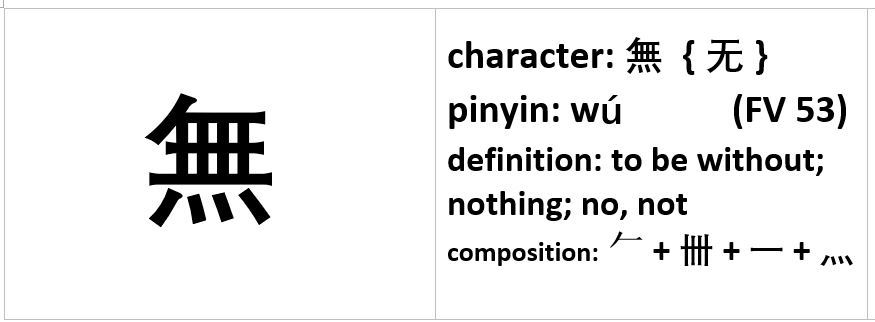
The Four Great Vows, Lesson One
Lesson One:
四 弘 誓 願
眾 生 無 邊 誓 願 度
煩 惱 無 盡 誓 願 斷
法 門 無 量 誓 願 學
佛 道 無 上 誓 願 成